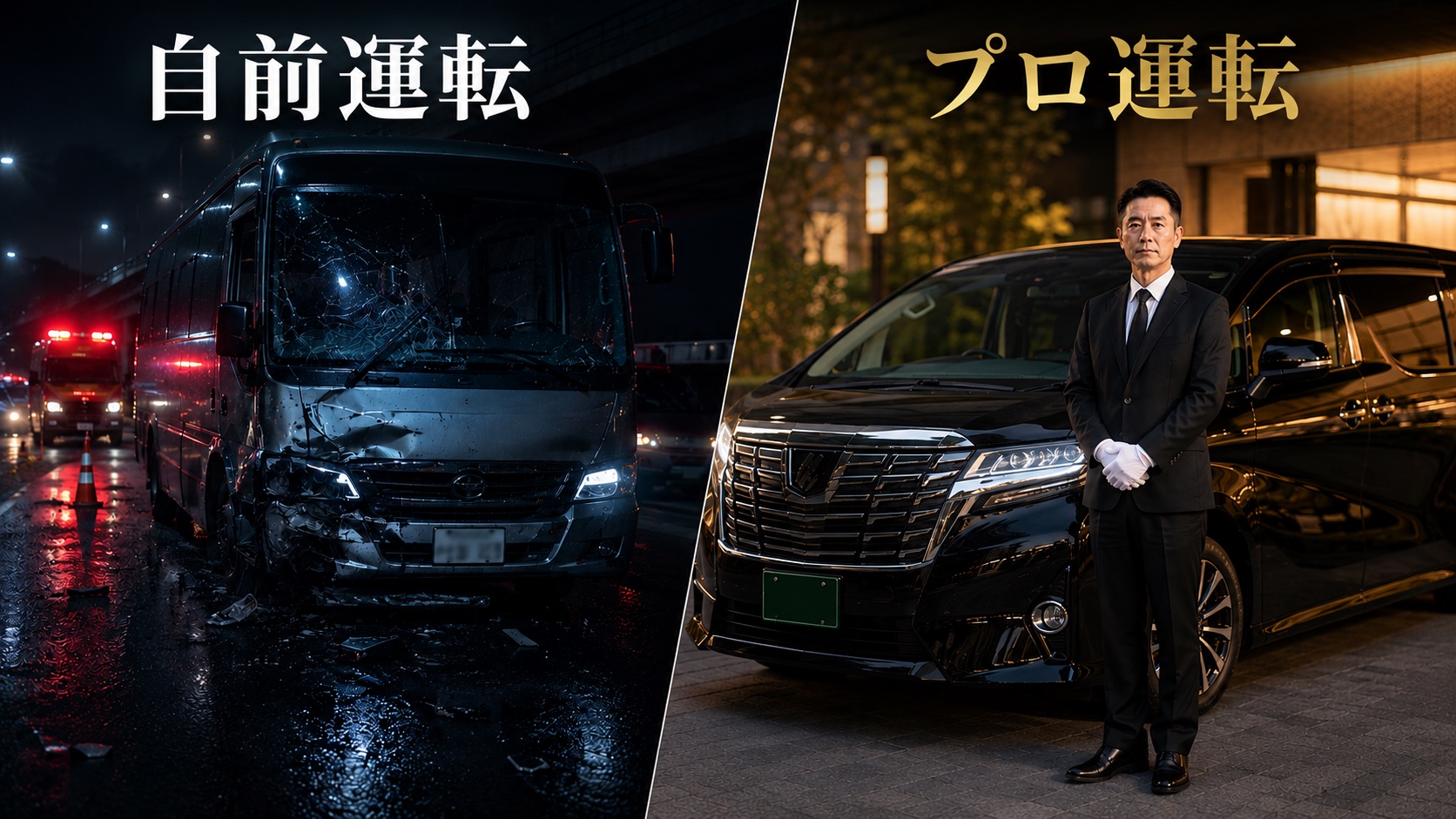
The microbus accident on the Banetsu road taught us a lesson.
'Professional driver'.The real meaning of
Driving record, dual licence, safety management system - professional drivers have 'proof'.
Self-driving vs professional driving, the difference makes the difference between life and death.
Microbus collision on the Banetsu Expressway in Koriyama. Police are close to the 68-year-old man who was driving.Arrested on suspicion of manslaughter by negligent driving.The company has decided to do so. Whether this driver was a 'professional driver' or not - that is one of the biggest lessons to be learnt from this accident.
It is commonplace throughout the country for 'acquaintances' or 'employees' to drive microbuses when travelling with large groups of people. However, this accident was,How 'who drives' directly affects lives.We have once again confronted the issue of This article will sort out the essential differences between professional and non-professional drivers and explain in detail what it means to choose a professionally driven jumbo or wagon taxi.
CHAPTER 01. Microbus accident on the Banetsu Road - lessons to be learnt from this accident.
Was the 68-year-old driver a 'professional driver'?
What emerges from the fact that '68-year-old male, negligent driver, fatally injured',Likely not to have been a professional driver in the passenger transport business.This is the point that. If you are an occupational driver of a passenger transport operator licensed by the Ministry of Land, Infrastructure, Transport and Tourism, you are required by law to take a roll call before departure, conduct an alcohol check and be checked by the operation manager. If those systems had been functioning, a tragedy like this could have been prevented.
- A medium licence or higher is required to drive a microbus (capacity between 11 and 29 passengers), though,'Being licensed' and 'being able to safely manage and drive' are two very different things.be
- The overall length, width, blind spots and braking distance of the vehicle are fundamentally different from those of a passenger car, making it extremely difficult to drive safely on public roads without specialised training.
- Fatigue, poor physical condition and age-related reduction in reaction time,Mechanisms to eliminate the risk of reliance on individuals in advance.This is what professional organisations are all about
The question this accident poses for us
- Questioning what it means to 'leave' driving to someone else.-It is important to leave the responsibility to "professionals with safety responsibilities" rather than "licensed personnel".
- Driving a heavy vehicle requires a different level of skill and experience.-The biggest risk is to think that you can drive the same way as a passenger car.
- Pre-operational safety check processes can make the difference between life and death.-Physical condition checks, alcohol checks and vehicle inspections will only work if they are mandatory.
- Need for systematic management of the characteristics of older drivers.-should be objectively managed through aptitude tests and medical examinations, rather than relying on individual perceptions.
- The price of letting non-specialists drive for 'cost savings'.--The risks to human life far outweigh the costs that could be saved.
CHAPTER 02. Proof of 'driving record' required of professional drivers.
What is a driving record - a professional 'CV'?
To engage in passenger transport as a vocational driver, it is not enough to simply have a driving licence. Transport operators who employObligation to ensure that the applicant's 'driving record certificate' is obtained and checked.The following is a list of all past traffic violations, accidents, and licence cancellations/suspensions. This is an official certificate issued by the Centre for Automobile Safety and Driving, which lists and records past traffic violations, accidents, and licence cancellations and suspensions.
Official certificates that must be checked by the 'employer' of the occupational driver.
- ▶Issuing authority:Issued by the Centre for Automobile Safety and Driving. Official document recording driving history for the past three, five or all of the past three years.
- ▶Recorded contents:Type and number of traffic offences, record of traffic accidents (first party), full history of licence revocations, suspensions and suspensions of effect.
- ▶Obligation of passenger transport operators to obtain:Based on guidelines from the Ministry of Land, Infrastructure, Transport and Tourism, operators are strongly required to obtain and check driving records when hiring drivers
- ▶Periodic update checks:It is the standard of professional operators to continue to check the driving record of their drivers on a regular basis, not only at the time of recruitment, but also during their employment
- ▶Operators who do not check this certificate are at risk:Operators who allow passengers to board without checking the driver's past have fundamentally inadequate safety management.
Four proofs of being a 'professional'.
Submission and verification of driving record.
Must be obtained by the operator before hiring. Checks past violation and accident histories and only allows passengers to be carried by persons without problems.
Obligation to obtain a dual licence.
A second-class passenger licence is required for passenger transport. The academic and practical examinations are significantly more difficult than the first class and certify the skill to safely transport passengers.
Periodic health checks and aptitude tests
Annual or at least biannual health check-ups are required by law. Changes in physical functions due to ageing are also systematically identified and managed.
Pre-departure roll call and alcohol test
Conducted every time by the operations manager. The process of ensuring that alcohol consumption and ill health is played down is a decisive difference to the average driver.
CHAPTER 03. Self-driving vs professional driving - the difference makes the difference between life and death.
Overall picture of the risks posed by 'driving ourselves'.
The choice to 'drive on your own' appears at first glance to be a cost-saving option when travelling in large groups, such as on company trips, weddings, funerals and sporting expeditions. However, in practice,Invisible costs and risksare piling up. The recent accident on the Banetsu road is the worst consequence of this. Check the differences between self-driving and professional driving, item by item, in the following comparison.
🚐 Own operation
Cases where an acquaintance, employee or secretary drives
🚕 Professional operation
Professional jumbo and wagon taxi drivers
Conclusion - 'cost savings' in self-driving is an illusion
Self-supporting operations appear cheaper "if no accidents occur". Even one serious accident, such as the recent one on the Banetsu Expressway, can result in the loss of human lives, compensation and trust in the organisation. Entrusting the work to professionals is not a 'cost' but an 'investment in safety'.
CHAPTER 04. I want to leave it to the professionals - situations where jumbo taxis and wagon taxis come into their own.
Professional drivers for the 'important move'.
Group transfers for weddings, funerals and legal events
The day of the funeral/wedding can be physically and mentally draining. It is very dangerous for someone to drive an unfamiliar large vehicle. You can get in with your mourning clothes on and head to the ceremony without the stress of transport.
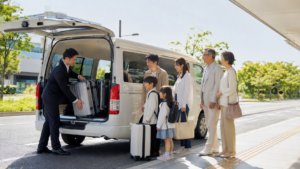
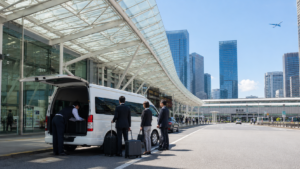
Transfer of large groups to and from airports and Shinkansen stations
The route selection, traffic jam avoidance and early departure suggestions, calculated backwards from the flight time, are only possible because we are professionals. Everyone can travel with their luggage and relax until arrival.
Group expeditions for skiing, mountaineering and outdoor activities
Snow-covered roads and mountain trails are nerve-wracking even for experienced drivers. Heavy loads, poor road surfaces, fatigue - the more adverse these conditions are, the more life-saving it is to call in the professionals.
Company travel, corporate training and inspection travel
Graduate from the structure of 'driving at someone else's expense'. Everyone can travel more relaxed and perform better in the field.
Transport home after drinking and partying
Only a jumbo taxi can reduce the risk of drunk driving to zero. Everyone, including the organisers, can enjoy themselves to the fullest and return home safely.
CHAPTER 05. Things to check before booking with JumboTaxi.com
Information to be prepared at the time of booking.
Jumbotaxy.comThen you can easily book your place using the contact form. It will be easier if you prepare the following in advance
- Date, time, place and destination of the ride (if there are multiple stops, the route is shared).
- Number of passengers (adults, children and infants) and whether they have oversized luggage
- For airport/station transfers, flight number and bullet train number information.
- Whether a child seat is required (and the age and weight of the child if accompanied by a child)
- Check availability of motorways and toll roads.
Safety checklist for selecting operators.
- Have you obtained a passenger transport permit (green number) from the Ministry of Land, Infrastructure, Transport and Tourism?-Picking up and dropping off passengers with white plates is illegal and risks being uninsured.
- Are drivers' driving records checked at the time of recruitment?-It is also the passenger's natural right to check directly with the operator.
- Are pre-departure roll call and alcohol tests conducted?- - Operators who omit it have fundamentally inadequate safety management.
- Is passenger personal insurance and voluntary insurance in place?-Compensation arrangements in the event of an accident protect passenger safety.
For safe transfers, go to Professional Driver. Book now.
Driving record, two licences, safety management system - JumboTaxi.com is a professional service that has it all.
For weddings, funerals, sightseeing, airport transfers, corporate transfers and all other occasions.
The microbus accident on the Banetsu Road in Koriyama City provided a significant opportunity to rethink the question of who should drive. Driving record checks, second-class licences, regular health checks, pre-departure roll call - these are things that professional drivers are naturally equipped with. It is the transport of your loved ones that should be entrusted to a professional driver with all the certifications. I reiterate. Regret begins after an accident has happened. After you have lost a loved one, it is too late to cry, "Why didn't I ask a professional at that time?". You have the right to choose cheapness. But - you also receive the consequences of that choice.